Episode 1

What is Novelia?

Novelia is an AI-powered platform to read original light novels and fan fiction, create your own in just a few taps, and chat with the characters. New, illustrated episodes arrive daily — free to start.

Learn more about Novelia →New sign-ups get 5,000pt
The Past with No Escape Episode 1: Chapter 1

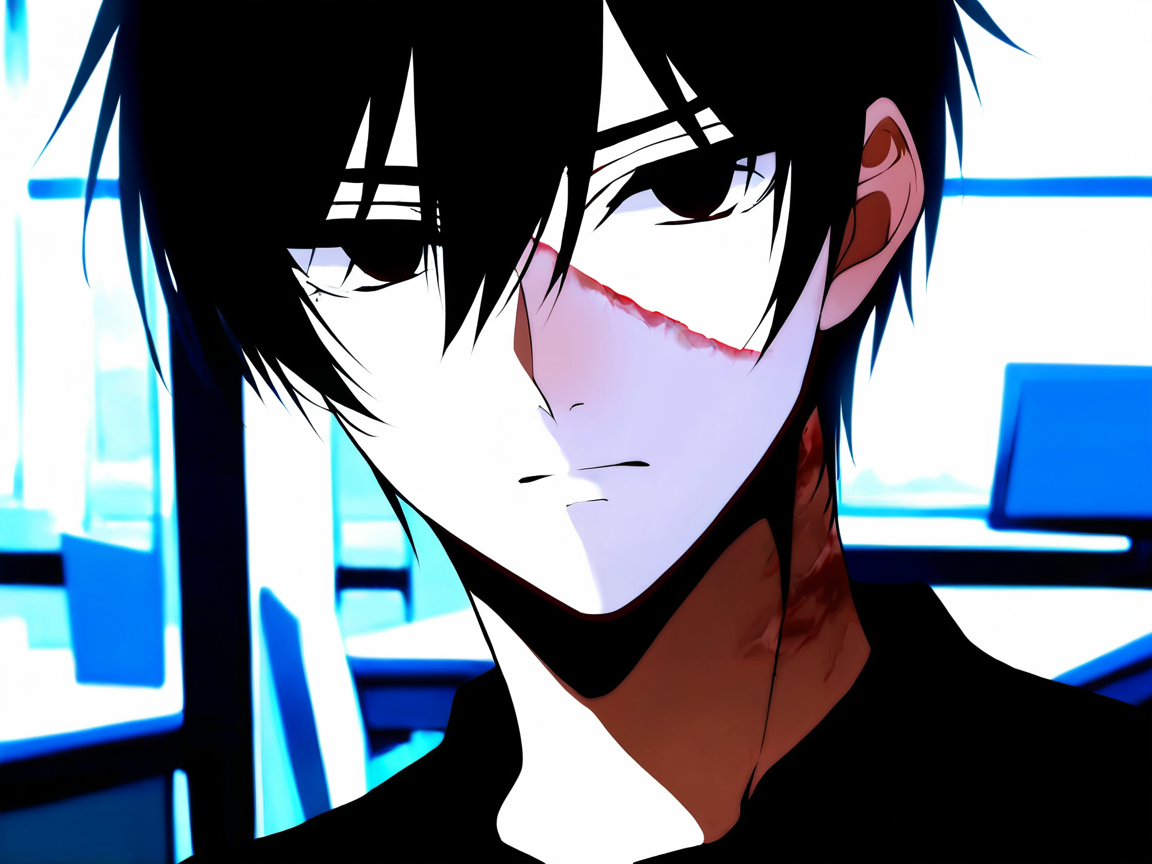
Soichi Takizawa — illustration from "The Past with No Escape" Episode 1 "Chapter 1"
Three o'clock in the afternoon. Fourth floor of the Kasuga Building in Yotsuya, Takizawa Security Office. From the window, the crowds on Shinjuku Street were visible. The murmur of the throng drifted in distantly, and the sunlight fell mercilessly across the floor. Takizawa Soichi kept his gaze fixed beyond the monitor, suspended in that shaft of light. Corporate security documents. Request letters from multiple companies. Printed reports. The desk was layered with nothing but papers that composed his "daily life." Thirty-two years old. Black hair cut short, with a slight natural wave that had been styled with gel several times over. Eyes of deep black that, depending on the angle, could appear gray. His gaze carried a constant wariness of his surroundings. His face itself was unremarkable—the kind that would draw no second glances on the street. But a burn scar running from his left cheek down his neck interrupted that anonymity. An old wound. Three years old. Black shirt, plain slim trousers, black sneakers on his feet. His appearance held no excess. Life's traces were thin. There was the lightness of someone who carried nothing. Soichi scanned the documents while periodically vigilant of his surroundings. A habit. Or rather, something closer to instinct. As a former member of the "Talon" unit—a counter-terrorism special operations team—the senses cultivated over three years in the field had not changed, even within the guise of his work as a security consultant. If anything, this job itself was a masquerade, a way to conceal those instincts and dissolve into society. Annual income: six million yen. Clients were primarily small to mid-sized enterprises. The work involved improving office security systems, employee training, information security assessments. All of it was surface-level, nothing approaching genuine crisis management. Peaceful work. Yet deep within, the hollowness of maintaining that peace smoldered constantly. Three years ago, the bombing operation "Ash Decree"—the explosion triggered in the industrial park along the Chiba coast—the flames of that moment, the death screams, the heat that had burned his left cheek, none of it had faded. Three-fifteen in the afternoon. Beyond the window, across Shinjuku Street, on the roof of a building—a six-story aging structure—a figure appeared. Only for an instant. At the edge of Soichi's vision, something reflected the sunlight. From this floor's vantage point, the line of sight was nearly horizontal. Even at a distance of roughly two hundred meters, if someone stood on that roof, recognition was possible without binocular magnification. Especially in daylight, reflected light had been a crucial indicator for detecting enemy positions on the battlefield. Soichi's gaze reacted instantly. He tore his eyes from the documents and fixed them on the window. But in the next moment, there was nothing. The figure had vanished. The light reflection was gone. A trick of the eye, or had someone truly been there? For three years, Soichi had been sensitive to such minute changes. He possessed an aptitude for sensing enemy presence. Yet simultaneously, such hypersensitivity might be a false alarm triggered by the trauma of three years ago. A deep breath. He recovered his composure. Soichi returned his eyes to the documents. But he could not concentrate. His gaze traced the characters, but his mind did not process their meaning. Five o'clock. Work ended. A twenty-five-square-meter one-room office. A desk, a simple bed, server racks. Only minimal furniture. The traces of life were sparse. This was both the workplace of "Takizawa Soichi," security consultant, and simultaneously a residence under state surveillance—a condition of his separation from the "Talon" unit. The special operations personnel separation agreement—ten years of confidentiality obligations in exchange for permission to infiltrate civilian society—required that Soichi's residence be reported regularly to the authorities. That fact imposed a silent constraint on his every action. As he reached for the door handle. A single white envelope lay at his feet. No sender's name was written on it. Only "Takizawa Security Office." Soichi stopped in place for a moment. Alert. The corridor before the entrance was not a blind spot for security cameras. The surveillance camera installed by the building management company constantly filmed this floor's hallway. Which meant someone had deliberately delivered this envelope, yet Soichi had seen no one. It suggested the sender either possessed knowledge of the surveillance system or was someone from within the management company. But at the same time—there was a sense of resignation. If an assassin were coming, they would have come already. For these three years, Soichi had always been a potential target. Caution now would make little difference. So Soichi picked up the envelope. The weight felt in his fingertips. Thin. Only one thing inside. He returned to the office and opened the envelope on his desk. A single photograph fell out. The ruins of the Takazu Industrial Park in Chiba Prefecture. The remains of Research Building C. A structure with exposed steel frame, mountains of rubble, walls charred black. The place Soichi had bombed three years ago. Exposed—no, made to remember. On the back, a single line scrawled in haste. "You do not know the truth." Soichi's expression tightened slightly. Five-thirty in the afternoon. He sat on the simple bed in the office. The hand gripping the photograph trembled faintly. A tremor noticeable even to himself. For three years, he had suppressed such physiological responses. The ruins in the photograph were that night itself. "Ash Decree"—Captain Yazaki's order. Soichi had placed the explosives. Set the timer. Thirty-four people were in the building. He had believed they were terrorists. Because Yazaki said so. Because the official record said so. At the moment of detonation, the building was engulfed in flame. A massive explosion roared into the night sky, and the structure collapsed. Then the blast wave struck Soichi. It burned his left cheek. Searing pain. The scorching sensation when he fell to the ground. The burn scar had remained on Soichi's face ever since. It would not fade. It could not be hidden. Every time he looked in a mirror, he was reminded of that night. "You do not know the truth." Who had written those words? For three years, Soichi had remained silent. The oath exchanged upon his separation from the "Talon" unit—the special operations personnel separation agreement imposed ten years of confidentiality obligations. Violation meant court-martial equivalent punishment. Effectively, "erasure." Assassination in all but name. State-sanctioned obliteration. For the remaining seven years, Soichi had to live under that constraint. During that time, he could speak of nothing regarding his past. Reveal nothing. Move toward nothing. But someone knew his past. And they had begun to shake him. He filed the photograph away in a desk drawer. If he moved now, he would play into the sender's intentions. But if he ignored it, greater danger might approach. Soichi analyzed the situation coldly. A habit from his military days. Not emotion, but a bird's-eye view of circumstances. Multiple possibilities existed. First, a message from Yazaki. But direct contact from him seemed unlikely. He was more cautious. Second, contact from the families of those killed in "Ash Decree." Officially, the target was designated a "logistics base of an international terrorist organization." If so, the families would not be civilians but the relatives of terrorists. That possibility was low. A third possibility—someone from their own side. From within "Talon." Soichi gazed out at the night cityscape beyond the window. The streetlights of Yotsuya were beginning to illuminate. The spring night had already grown deep. He felt something shift within him. For three years, he had believed that by living peacefully as a security consultant, he could escape guilt. But that illusion had been completely shattered now, by a single photograph and a single line of text. Peace as fiction was, in the end, only fiction. Someone had begun to shake that fiction. Soichi made a quiet decision. "It is not over"—that meant the three years of peace had ended, and a new battle was beginning. Six o'clock. The fluorescent light in the office illuminated Soichi's burn scar and the sharp intensity of his gaze with cold clarity.